












Enhancing Restaurant Experiences Through AI Innovation
By Tom Seest
At Dunlap Directory, we help Dunlap, Tennessee, business tell stories and market and sell their products and services.
Please share this post with your friends, family, or business associates who may want help telling the stories of their legacy.
Can Restaurants Improve By Leveraging AI Tools?
Imagine walking into a bustling restaurant in Dunlap, Tennessee, the aroma of sizzling dishes wafting through the air, and the sound of laughter echoing off the walls. This isn’t just a place to eat; it’s where stories are shared, laughter is born, and memories are made. But running such a beloved establishment is no easy feat. The restaurant industry is a complex tapestry of flavors, logistics, and human connection, and that’s where AI tools can lend a powerful hand.
Every chef will tell you: the secret ingredient isn’t just high-quality food; it’s understanding your diners. AI can help unravel the mysteries of customer preferences and trends, collecting data that might slip right past even the most seasoned restaurateurs. With greater insights into what folks love to eat, how often they come in, and what keeps them coming back for more, owners can craft experiences that are not just palatable but genuinely unforgettable.
Now let’s hit the pause button for a moment. It’s one thing to turn out delicious entrees; it’s another to run a safe and ethical operation. By leveraging AI for inventory management, restaurants can reduce waste, save money, and contribute to a more sustainable environment. Diners today are more socially conscious than ever, and they want to support businesses that prioritize responsible practices. Imagine walking in, knowing that your favorite restaurant is not only serving you up some fine dishes but also caring for the planet. That connection? It’s priceless.
Skeptics may wonder if technology can truly capture the heart of hospitality. Isn’t that a human trait? Absolutely. But think of AI as a sous chef, one that helps enhance the craft rather than replace it. It takes the grunt work out of number-crunching, freeing up passionate owners and staff to focus on what they do best—making genuine connections with patrons.
So next time you sit down in your favorite Dunlap diner, consider the layers of understanding that AI tools could bring to your dining experience. These are not just algorithms; they represent a commitment to excellence, community, and conscious growth. Together, restaurants and technology can turn a good experience into a great one, ensuring that the tables are filled not just with food, but with joy. And isn’t that what we all crave—a meal that warms the soul and brings us back together?

Can Restaurants Improve By Leveraging AI Tools?
Can Restaurants Improve By Leveraging AI Tools?
- The restaurant in Dunlap, Tennessee serves as a hub for sharing stories, laughter, and memories.
- Running a successful restaurant is complex, involving flavors, logistics, and human connections.
- AI tools can help unravel customer preferences and trends, improving dining experiences.
- Using AI for inventory management reduces waste and supports environmental sustainability.
- Consumers value social responsibility and prefer businesses that prioritize ethical practices.
- AI complements human hospitality, handling data and allowing staff to focus on genuine customer connections.
- The integration of AI in restaurants enhances the overall dining experience, fostering joy and community.

Can Restaurants Improve By Leveraging AI Tools?
Table Of Contents
- Can Restaurants Improve By Leveraging AI Tools?
- What Data Should We Analyze To Make Informed Decisions With AI?
- Can AI Assist In Taking Personal Dietary Preferences Into Account?
- How Do We Ensure AI Respects Customer Privacy In Our Restaurants?
- Is AI Technology Trustworthy When Handling Sensitive Customer Data?
- How Can AI Tools Enhance Staff Efficiency During Peak Hours?
- Conclusion
- Other Resources
- Glossary Of Terms
- Other Questions
- Haiku
- Poem
- Checklist
What Data Should We Analyze To Make Informed Decisions With AI?
When we think about the data needed for informed AI decision-making, let’s picture a small town like Dunlap, Tennessee. Nestled among rolling hills, it’s a place where every farmer knows the soil, every shopkeeper knows their customers, and every resident carries a little piece of history in their heart. That connection between people and their surroundings isn’t just nostalgia; it’s essential for making smart decisions with AI.
At its core, the essence of good data is tied to the stories of the communities we live in. We’ve got to start by understanding our own narratives—the demographics, consumer behavior, and trends specific to places like Dunlap. These stats are more than numbers; they represent our friends, families, and neighbors. They carry the weight of dreams, struggles, and triumphs. When we infuse this sentimental wisdom with empirical data, we start to build an ethical foundation for artificial intelligence.
But let’s put those warm-fuzzy feelings aside for just a moment and engage the rational mind. We also need to dive into macroeconomic indicators, social media trends, and performance metrics. Understand how weather patterns affect agricultural yield or how online shopping is reshaping local businesses. Analyzing such data provides that authority we often crave. It brings clarity to decision-making, allowing us to not only adapt but also thrive in tough situations.
And speaking of tough situations, let’s not forget about instincts—the gut feeling that tells us when something doesn’t add up. Qualitative data from community feedback gives us insights that numbers alone cannot provide. A farmer in Dunlap might instinctively know that last year’s drought affected crop choices more than what the data suggests. We must blend quantitative and qualitative data, acknowledging that human experience is as valuable as any statistic.
Finally, let’s bring it all back home: this isn’t just about crunching numbers or following trends; it’s about fostering connections. Engaging with our communities, understanding their unique nuances, and analyzing data that reflects their realities creates a tapestry of informed decision-making. It’s about preserving the heart and soul of places like Dunlap while harnessing the power of AI to forge a brighter future. By doing this, we can ensure that technology enhances our lives without losing the essence of what makes us human.

What Data Should We Analyze To Make Informed Decisions With AI?
What Data Should We Analyze To Make Informed Decisions With AI?
- Understanding data for AI decision-making involves a connection to local narratives, demographics, and consumer behaviors.
- Data represents real people and their experiences, contributing to an ethical foundation for AI.
- Key data types include macroeconomic indicators, social media trends, and performance metrics.
- Analyzing weather patterns and online shopping behavior can help local businesses adapt and thrive.
- Qualitative data, such as community feedback, provides insights beyond mere statistics.
- Blending quantitative and qualitative data enhances decision-making and acknowledges human experience.
- Ultimately, informed decision-making should preserve community essence while leveraging AI for future improvements.

What Data Should We Analyze To Make Informed Decisions With AI?
Can AI Assist In Taking Personal Dietary Preferences Into Account?
Picture yourself sitting at a table in Dunlap, Tennessee, surrounded by family and friends, sharing a home-cooked meal that perfectly matches your tastes and dietary needs. Imagine an AI that knows exactly what you love and what you don’t—a digital maestro conducting the orchestra of flavors that dance on your plate. It’s not just about numbers and data; it’s about the heart behind every bite.
Now, let’s engage our heads for a moment. We all know that each person’s dietary preferences can be as unique as a fingerprint. Vegan, gluten-free, ketogenic—the options are endless, and the stakes are high. Eating isn’t just sustenance; it’s intertwined with our values, our health, and our way of life. Artificial intelligence has the potential to analyze vast amounts of data, learning from individual choices and preferences over time. It can help us craft personalized meal plans in the same way a skilled chef tailors a dish for a discerning guest. When that AI starts understanding not just what you’re eating, but why you choose it, that’s when it becomes a true ally.
But let’s not forget the ethical dimension. We live in an age where food inequality lurks around every corner. While some in Dunlap might have the privilege of choice, others struggle to put dinner on the table. AI can democratize access to nutritional guidance, helping folks make informed decisions about what goes into their bodies, regardless of their economic status. When technology is harnessed in this way, it becomes more than a tool; it becomes a vehicle for social change.
Now, consider the narrative that unfolds when AI truly nails your preferences. Think of it not as a soulless algorithm but as a trusted companion, dedicated to enhancing your culinary experiences. It’s the difference between a meal that fills the belly and one that nourishes the soul. With every recipe generated, every grocery list compiled, individuals start to forge a deeper connection—not just with their meals, but with their personal journey towards better health and well-being.
The question isn’t if AI can assist us. It’s how it can amplify our choices and elevate our dining experiences. By embracing this technology, we can cultivate trust, foster community, and inspire a culinary revolution that honors our diverse dietary preferences, all while cherishing the flavors that make us who we are.

Can AI Assist In Taking Personal Dietary Preferences Into Account?
Can AI Assist In Taking Personal Dietary Preferences Into Account?
- AI has the potential to personalize dietary experiences by learning individual tastes and preferences.
- Each person’s dietary choices are unique and can reflect their values, health considerations, and lifestyle.
- Artificial intelligence can craft tailored meal plans akin to how a chef customizes dishes for guests.
- Ethical concerns regarding food inequality highlight the need for accessible nutritional guidance through AI.
- AI can democratize access to healthy meal planning, benefiting individuals regardless of economic background.
- A well-designed AI can enhance culinary experiences, creating deeper connections with meals and health journeys.
- The focus should be on how AI can amplify choices and foster communities, enriching diverse dietary preferences.

Can AI Assist In Taking Personal Dietary Preferences Into Account?
How Do We Ensure AI Respects Customer Privacy In Our Restaurants?
Imagine sitting in a bustling restaurant in Dunlap, Tennessee, where the aroma of fresh, locally sourced meals wafts through the air. You’re surrounded by family and friends, sharing laughter and stories. Now, imagine that the very technology designed to enhance this experience could also infringe on your privacy. It’s a concept that ought to make us all pause and ponder.
When it comes to integrating AI into our restaurants, we must prioritize the emotional connection we share with our customers. Every individual who walks through our doors trusts us not only with their taste buds but with their personal information. This trust is sacred, and breaking it can be as damaging as serving a cold meal on a warm summer’s day. By placing customer privacy at the forefront of our technological advancements, we ensure that every diner feels safe and valued—a simple act that bridges the heart and the head.
Rationally speaking, it comes down to a matter of ethics. Our customers deserve to know how their data is being used. Transparency is not just a buzzword; it’s a commitment to our patrons. Let them see that we’re not just a restaurant; we are an institution they can depend on. We can enhance their dining experience without compromising their personal space. This means adopting robust data protection practices and letting our customers in on the conversation about how their information is utilized.
From an authority perspective, industry leaders who’ve taken the right steps serve as examples. Companies that prioritize privacy have watched their reputations soar, gaining the trust of consumers who crave greater accountability. By emulating their practices, we place ourselves at the forefront of ethical innovation.
Socially, as proud members of the Dunlap community, it’s powerful to remember that our actions ripple outwards. When patrons trust us to handle their data responsibly, they recommend us to friends and family, turning a restaurant into a beloved gathering spot rather than just somewhere to grab a bite.
Ultimately, it’s about fostering a sense of connection. The challenge before us isn’t merely to embrace technology; it’s to use it to enhance the human experience. So the next time you’re seated at your favorite table, know that beneath the surface of a bustling restaurant, we’re vigilant guardians of your privacy, dedicated to every diner who walks through our door.

How Do We Ensure AI Respects Customer Privacy In Our Restaurants?
How Do We Ensure AI Respects Customer Privacy In Our Restaurants?
- Integrating AI in restaurants must prioritize emotional connections with customers.
- Customers trust restaurants with both their taste preferences and personal information.
- Maintaining customer privacy is essential to preserving trust and ensuring diners feel safe.
- Transparency in data usage is a commitment that restaurants should uphold.
- Industry leaders that prioritize privacy enhance their reputations and gain consumer trust.
- Responsible data handling fosters community recommendations, building a loyal customer base.
- The goal is to use technology to enrich the dining experience while protecting customer privacy.

How Do We Ensure AI Respects Customer Privacy In Our Restaurants?
Is AI Technology Trustworthy When Handling Sensitive Customer Data?
In the rolling hills of Dunlap, Tennessee, where folks still believe in the value of a handshake and the weight of a promise, the question looms large: Is AI technology trustworthy when it comes to handling sensitive customer data? It’s a conversation steeped in more than just algorithms and bits of code; it’s about the very relationship we forge with the tools we create.
Picture this: An earnest small-business owner in Dunlap, pouring their heart into building a customer base, believes in transparency and trust. They’ve watched their community thrive, hinged on the personal connections that define a small town. But then, the digital age rolls in like a thundercloud, whispering promises of efficiency, convenience, and growth — powered by AI. Are we, as a society, ready to grant swaths of private information to an impersonal algorithm? That’s the gut check we all need to make.
On one hand, AI holds the promise of higher security and swift processing. It can analyze patterns faster than the speed of light, detecting fraudulent transactions and safeguarding sensitive information. There’s an undeniable rational appeal here; the numbers speak volumes about the potential for enhanced protection. But let’s not forget the ethical dimension: we must ask ourselves what safeguards are put in place to prevent misuse of that data. In the heart of Dunlap, there’s a saying: “Trust is hard-earned and easily lost.”
Stories emerge from places not too different from ours, where breaches have shattered that trust. Consider the aftermath of a data leak — not just the dollars lost or the identities stolen but the ramifications on relationships, businesses, and communities. We must caution against viewing AI merely as a magical box of solutions. It needs thoughtful oversight, transparency, and accountability.
It’s time for us to take charge in ensuring the trustworthiness of these technologies. Initiatives that include community voices, ethical guidelines, and rigorous safeguards can align AI with the values we cherish. Together, we can shape an environment where the heart, head, and gut work in tandem to create a tech landscape that honors our most sensitive data, proving that even in this age of digital complexity, the hometown values of Dunlap endure, guiding us toward a future we can believe in.
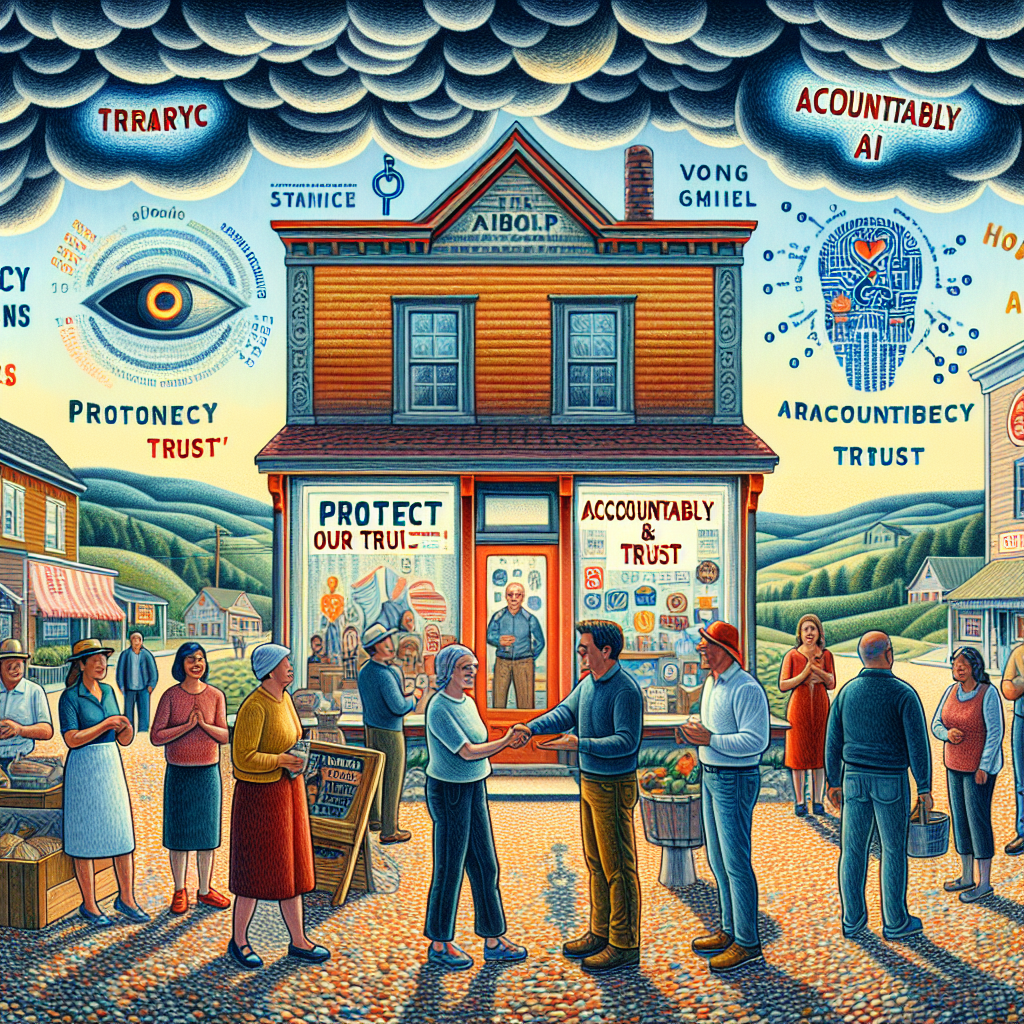
Is AI Technology Trustworthy When Handling Sensitive Customer Data?
Is AI Technology Trustworthy When Handling Sensitive Customer Data?
- In Dunlap, Tennessee, trust in AI technology for handling sensitive customer data is a major concern.
- Small-business owners value transparency and personal connections impacted by the rise of AI.
- AI offers promises of higher security, swift processing, and pattern analysis for fraud detection.
- Ethical considerations around data misuse and safeguards are crucial for maintaining trust.
- Data leaks can destroy community trust and relationships, highlighting risks associated with AI.
- Calls for thoughtful oversight, transparency, and accountability in AI implementations are essential.
- Community involvement, ethical guidelines, and safeguards are necessary to align AI technology with cherished values.

Is AI Technology Trustworthy When Handling Sensitive Customer Data?
How Can AI Tools Enhance Staff Efficiency During Peak Hours?
When the clock strikes peak hours, whether it’s in a bustling café in Dunlap, Tennessee, or a retail store at the height of the holiday rush, the pressure is palpable. Employees hustle, customers buzz with anticipation, and the air feels thick with the urgency of it all. Herein lies a challenge: how do we ensure that this energy doesn’t lead to chaos but rather flows seamlessly into a symphony of efficiency? Enter AI tools—the unsung heroes poised to lighten the load.
Picture this: a barista in Dunlap mastering the art of the perfect latte while AI assists by managing the inventory in the background. Those smart systems analyze sales patterns, predict stock shortages, and even suggest replenishment orders—all of which frees up staff to focus on what truly matters: connecting with customers. It’s more than just numbers on a screen; it’s about relationships and experiences. The emotional connection we feel when someone remembers our name or favorite order? That’s invaluable.
Now, let’s talk numbers. Rationally, integrating AI tools during peak times is a no-brainer. Studies show that businesses adopting these technological marvels see a boost in their operational efficiency of up to 30%. And it’s not just about speed; it’s about accuracy. AI minimizes human error, ensuring that every customer leaves satisfied and every task is executed as it should be. It allows staff to engage more meaningfully, rather than being bogged down by the mundane.
Ethically, there’s merit in using technology to empower our workforce. When employees feel supported by AI—like having an extra pair of hands—they are more likely to take pride in their work. In Dunlap, community is the bedrock of success, and every smiling cashier or confident server reinforces that ethic of care and connection.
Moreover, stories abound of teams that have leveraged AI just when they needed it most. Perhaps a local diner that replaced a cumbersome manual scheduling system with an AI-driven one, allowing staff to better balance work and home life. Or a retail shop that utilized AI-driven analytics to tailor its inventory to community preferences, creating an inviting shopping experience. It’s all connected.
When you consider the dynamics at play during peak hours, remember this: AI tools aren’t here to replace the human touch; they’re here to amplify it. In Dunlap, Tennessee, let’s embrace the fusion of humanity and technology. Together, we can turn urgency into opportunity, chaos into connection, and peak hours into peak experiences for everyone involved.

How Can AI Tools Enhance Staff Efficiency During Peak Hours?
How Can AI Tools Enhance Staff Efficiency During Peak Hours?
- Peak hours in busy environments like cafés or retail stores create intense pressure for employees and customers.
- AI tools serve as valuable resources to enhance operational efficiency and reduce chaos during high-demand times.
- For example, baristas can focus on customer interactions while AI handles inventory management and sales analysis.
- Businesses that integrate AI can improve operational efficiency by up to 30% and reduce human errors.
- AI empowers employees, fostering pride in their work and reinforcing community connections.
- Success stories highlight the positive impacts of AI, such as improved scheduling and tailored inventory strategies.
- AI tools enhance, rather than replace, the human touch, turning peak hours into enhanced experiences for all involved.

How Can AI Tools Enhance Staff Efficiency During Peak Hours?
Conclusion
As we wrap up our exploration of artificial intelligence in the restaurant industry, let’s take a moment to savor the recipe we’ve put together. Picture yourself elbow-deep in the heart of Dunlap, Tennessee, where the local diner isn’t just about burgers and fries; it’s a community’s heartbeat, pulsing with stories, laughter, and shared experiences. At the intersection of flavor and innovation lies AI—our sous chef, guiding us to a more personalized and sustainable dining experience.
Embracing AI tools is not merely about adding a dash of efficiency; it’s about deepening our connection to patrons. Here’s the thing: every data point is a snapshot of someone’s life—a family celebrating a milestone or a couple craving their favorite meal. By decoding preferences and trends, AI empowers restaurant owners to curate experiences that resonate, making each visit memorable. When you uncover the hidden narratives behind customer choices, you transform meals into meaningful moments.
But let’s not just tickle the heartstrings; we need to engage our heads, too. Our world is becoming increasingly conscientious. Diners today crave authenticity and responsibility. With AI managing inventory and reducing waste, restaurants can operate ethically while nurturing the planet. Consider the impact of your favorite diner adopting such practices—it turns a meal into a movement toward sustainability. Every action supports our community, making your dining experience beyond palatable—it becomes a testament to conscientious growth.
Now, let’s not forget the ethical imperative that comes with wielding this powerful technology. In an age where data breaches make headlines, protecting customer privacy is sacred. Restaurateurs must prioritize transparency to foster trust, ensuring diners feel secure while they enjoy their meals. It’s hard-earned trust that will lay the groundwork for flourishing relationships—both on and off the plate.
And lest we overlook the human factor, AI is not here to usurp the role of hospitality; rather, it’s a tool that enhances our innate ability to connect. During peak hours, AI takes care of the mundane so that servers can focus on building relationships. It’s about harmonizing the hustle of service with the warmth of genuine interaction.
In essence, the question isn’t whether restaurants can leverage AI tools—it’s how we can blend technology with the heartfelt human experience to create something truly extraordinary. In Dunlap, like everywhere else, we crave that warmth and connection. With AI as our ally, we can ensure that every meal is not just about food, but a celebration of community, flavor, and shared stories. Together, let’s fully embrace this flavorful future where technology and humanity coexist deliciously.

Conclusion
Conclusion:
- AI in the restaurant industry enriches the dining experience, making it more personalized and sustainable.
- Data points represent real people’s experiences, allowing restaurants to create memorable visits based on customer preferences.
- AI helps restaurants operate ethically by managing inventory and reducing waste, fostering a movement toward sustainability.
- Protecting customer privacy and prioritizing transparency is crucial for building trust in the digital age.
- AI serves as a tool to enhance, not replace, the human aspect of hospitality, allowing staff to focus on customer relationships.
- The integration of AI and human experience aims to create extraordinary dining moments that celebrate community and connection.
- The future of dining is about harmonizing technology with heartfelt interactions for a flavorful, shared experience.

Conclusion
Other Resources

Other Resources
Here is a list of other resources you can review online to learn more:
- Little Cove Campground
- Motel 6 Chattanooga, Tennessee
- Western Union
- Cowboy Church in the Sequatchie Valley
- Sequatchie County Middle School
- Perfect Blend Pest Solutions
- Renaissance Park
- Appalachian Armament LLC
- Taqueria La Rancherita
- Savage Gulf State Natural Area
- Prime Income & Tax Services
- Dunlap, Whitwell, area buy sale and trade
- Dunlap TENNESSEE For Free/Giveaway
Use This Prompt To Get More Resources With Your Favorite Online AI Tool: Please provide me with a list of online articles with their URLs in a bulleted list that I can read regarding Can Restaurants Improve By Leveraging AI Tools?

Other Resources
Glossary Terms
Can Restaurants Improve By Leveraging AI Tools? – Glossary Of Terms
1. Artificial Intelligence (AI): Technology that simulates human intelligence, enabling machines to perform tasks such as learning, reasoning, and problem-solving.
2. Machine Learning: A subset of AI that allows systems to learn from data and improve their performance without explicit programming.
3. Predictive Analytics: AI-driven analysis that forecasts future trends based on historical data, enabling restaurants to make informed decisions about menu items and staffing.
4. Customer Experience (CX): The overall perception customers have of a restaurant based on interactions from dining to service; enhancing CX can lead to customer loyalty.
5. Chatbots: AI-powered applications that simulate conversation with users to assist with reservations, orders, or frequently asked questions, improving customer service.
6. Personalization: Tailoring menu recommendations and marketing efforts to individual customers based on their preferences and behaviors analyzed by AI.
7. Inventory Management: AI tools that track stock levels and predict future inventory needs, helping restaurants reduce waste and improve profitability.
8. Dynamic Pricing: Pricing strategy that uses AI to adjust prices based on demand fluctuations, allowing restaurants to maximize profit during peak and off-peak times.
9. Sentiment Analysis: AI techniques that analyze customer reviews and feedback to gauge overall sentiment about a restaurant’s services and offerings.
10. Table Management System: AI-enhanced software that optimizes table assignments and wait time estimates to improve seating efficiency and customer satisfaction.
11. Data Mining: The process of extracting useful information and patterns from large data sets, which can inform menu creation and marketing strategies.
12. Augmented Reality (AR): Technology that enhances the dining experience by overlaying digital information (like a virtual menu) onto the real-world view via devices.
13. Voice Recognition: AI technology that interprets and processes human speech, allowing for voice-activated ordering systems in restaurants.
14. Automated Ordering Systems: Self-service kiosks or apps that leverage AI to streamline the ordering process, reducing wait times and labor costs.
15. Recommendation Engine: An AI system that analyzes customer preferences and suggests menu items, enhancing personalization and increasing sales.
16. Social Media Monitoring: Using AI tools to track and analyze restaurant mentions, reviews, and customer sentiment on social platforms for reputation management.
17. Sales Forecasting: Predictive analytics that estimates future sales based on past data, aiding in budgeting and inventory planning.
18. Food Waste Reduction: AI solutions designed to track food usage patterns and suggest improvements, minimizing waste and optimizing purchasing.
19. Staff Scheduling: AI systems that analyze peak times and employee availability to create optimized staff schedules, enhancing efficiency and labor management.
20. Customer Segmentation: The process of dividing a customer base into distinct groups to tailor marketing strategies and menu offerings effectively.
21. Menu Engineering: The practice of analyzing the profitability and popularity of menu items, often enhanced by AI, to optimize how dishes are presented and priced.
22. Blockchain: A decentralized technology that can enhance supply chain transparency, allowing restaurants to track the origin of ingredients and ensure quality.
23. Automated Delivery Systems: AI-driven logistics solutions that optimize delivery routes and timings, enhancing efficiency in restaurant delivery operations.
24. Feedback Loop: An ongoing process of collecting and analyzing customer feedback to continuously improve service and menu offerings based on AI insights.
25. Employee Training: AI-assisted training programs that utilize virtual simulations or personalized learning paths to enhance staff skills and customer service.
26. Customer Retention: Strategies driven by AI insights to keep existing customers engaged and returning, such as targeted promotions and loyalty programs.
27. Operational Efficiency: The optimal use of resources and processes facilitated by AI tools to reduce costs and improve service delivery.
28. Market Trends Analysis: The examination of industry trends using AI data analytics, helping restaurants stay competitive and responsive to changing consumer demands.
29. Customer Journey Mapping: A visual representation of the customer’s experience with a restaurant, enhanced through AI data analysis to identify pain points and opportunities.
30. Ethical AI: The consideration of moral implications and responsible use of AI technologies in the restaurant industry, focusing on transparency, privacy, and fairness.

Glossary Of Terms
Other Questions
Can Restaurants Improve By Leveraging AI Tools? – Other Questions
If you wish to explore and discover more, consider looking for answers to these questions:
- What specific AI tools can restaurants implement to improve their operations?
- How can AI help with menu optimization based on customer preferences?
- What are the potential downsides or challenges of integrating AI in restaurants?
- How does AI impact customer experience in ways that traditional methods cannot?
- What measures can restaurants take to ensure AI tools are effectively utilized?
- How can restaurants train their staff to work alongside AI technologies?
- Can AI support community engagement initiatives for restaurants?
- What examples exist of restaurants successfully leveraging AI for growth?
- What regulations govern the use of AI in the restaurant industry?
- How do customers perceive the use of AI in their dining experience?
- What role does AI play in enhancing food safety and quality control?
- How can restaurants measure the success of AI implementation?
- What is the cost associated with adopting AI tools in a restaurant setting?
- How can AI address food inequality and enhance nutritional access for diverse populations?
- What technologies are emerging in the AI landscape that could benefit restaurants in the future?

Other Questions
Haiku
Can Restaurants Improve By Leveraging AI Tools? – A Haiku
In bustling diners,
AI weaves joy from data,
Hearts, plates, and trust rise.

Haiku
Poem
Can Restaurants Improve By Leveraging AI Tools? – A Poem
In the heart of Dunlap, where laughter ignites,
Restaurants breathe life, with flavors so bright.
Yet behind every meal, a challenge lays bare—
To fill empty tables amid burdens they bear.
Imagine the warmth, as aromas entwine,
Yet running a kitchen is more than just time.
In the dance of delight, where stories take flight,
AI steps in, to guide in the night.
With algorithms whispering preferences near,
A sous chef of wisdom, revealing what’s dear.
Each plate served with passion, each return of old friends,
A narrative woven, where connection transcends.
But heed the call of the conscious, aware,
For dining’s not just of taste, it’s of care.
Waste less, save more, while the planet we save,
Ethical choices, our communities crave.
In this world of data, the heart guides the mind,
Blend numbers with stories, let truth be aligned.
For every statistic carries dreams yet untold,
The fabric of community—rich, warm, and bold.
Personalized dishes that honor each choice,
In the realm of nutrition, let every voice rejoice.
Yet while we embrace the tech with a nod,
We must shield our patrons—trust isn’t a façade.
Respect for their privacy, a promise we keep,
A bond that strengthens, as commitments run deep.
As tech weaves its magic, let’s not lose our way,
Connection is key, in the role that we play.
So, as we gather at tables aglow,
With AI as an ally, let authenticity flow.
In every sip savored, in each life we share,
Together we rise, a community laid bare.
Let’s harness innovation—don’t fear what it brings,
For at the core of restaurants, humanity sings.
In Dunlap’s warm kitchens, let love be the plan,
May AI help us serve, as we honor each man.

Poem
Checklist
Can Restaurants Improve By Leveraging AI Tools? – A Checklist
Emotional Appeals
1. ✅ _____ Create Memorable Experiences: Focus on how AI can help personalize dining experiences, ensuring guests feel valued and understood.
2. ✅ _____ Foster Community Connections: Engage with guests on a personal level, using AI insights to maintain relationships with repeat customers.
3. ✅ _____ Elevate the Dining ATMosphere: Consider how AI can help identify and replicate the ambiance elements that bring joy to diners.
Rational Appeals
4. ✅ _____ Analyze Customer Preferences: Use AI tools to gather data on diner preferences, frequency of visits, and menu favorites.
5. ✅ _____ Implement Efficient Inventory Management: Use AI to reduce food waste through smart inventory tracking and management.
6. ✅ _____ Track Performance Metrics: Regularly assess data regarding sales patterns, peak hours, and customer satisfaction metrics.
Ethical Appeals
7. ✅ _____ Prioritize Customer Privacy: Establish clear data protection policies and communicate them transparently to your guests.
8. ✅ _____ Support Sustainable Practices: Leverage AI for ethical sourcing and environmentally friendly practices, appealing to socially conscious diners.
9. ✅ _____ Democratize Access to Dietary Information: Ensure that AI tools help all customers, regardless of economic status, make informed dietary choices.
Authority Appeals
10. ✅ _____ Learn from Industry Leaders: Research and adopt practices from successful restaurants that utilize AI ethically and effectively.
11. ✅ _____ Stay Informed on AI Innovations: Regularly review emerging trends in restaurant technology to maintain a competitive edge.
Narrative Appeals
12. ✅ _____ Share Success Stories: Highlight testimonials from customers praising personalized and enhanced experiences made possible through AI.
13. ✅ _____ Craft a Bar Story: Develop narratives around your restaurant’s commitment to using AI responsibly, emphasizing the human element behind the technology.
Social Appeals
14. ✅ _____ Build Community Trust: Foster a reputation as a reliable establishment that prioritizes customer care and data privacy.
15. ✅ _____ Engage Through Feedback: Actively seek community input on AI initiatives to ensure alignment with local values and preferences.
16. ✅ _____ Create a Connected Environment: Harness social media to share how AI is improving the dining experience and inviting customer interaction.
By leveraging this checklist, restaurants can effectively bridge the heart, head, and gut, ensuring that technology and human connection work hand-in-hand to enhance overall dining experiences.

Checklist
At Dunlap Directory, we help Dunlap, Tennessee, business tell stories and market and sell their products and services.
Please share this post with your friends, family, or business associates who may want help telling the stories of their legacy.


